








For hundreds of millions of women in the developing world, the path to economic independence has not run through corporate careers or venture capital, but through something far simpler: a group of neighbours who pool their savings, lend to one another, and make decisions together. Self-help groups, savings collectives and microfinance institutions have become one of the largest women’s economic movements in history. The rigorous research on them tells a nuanced story — more encouraging in some respects than the hype, more sober in others — and getting that story right matters for anyone deciding where to put money and effort.
The scale of the movement
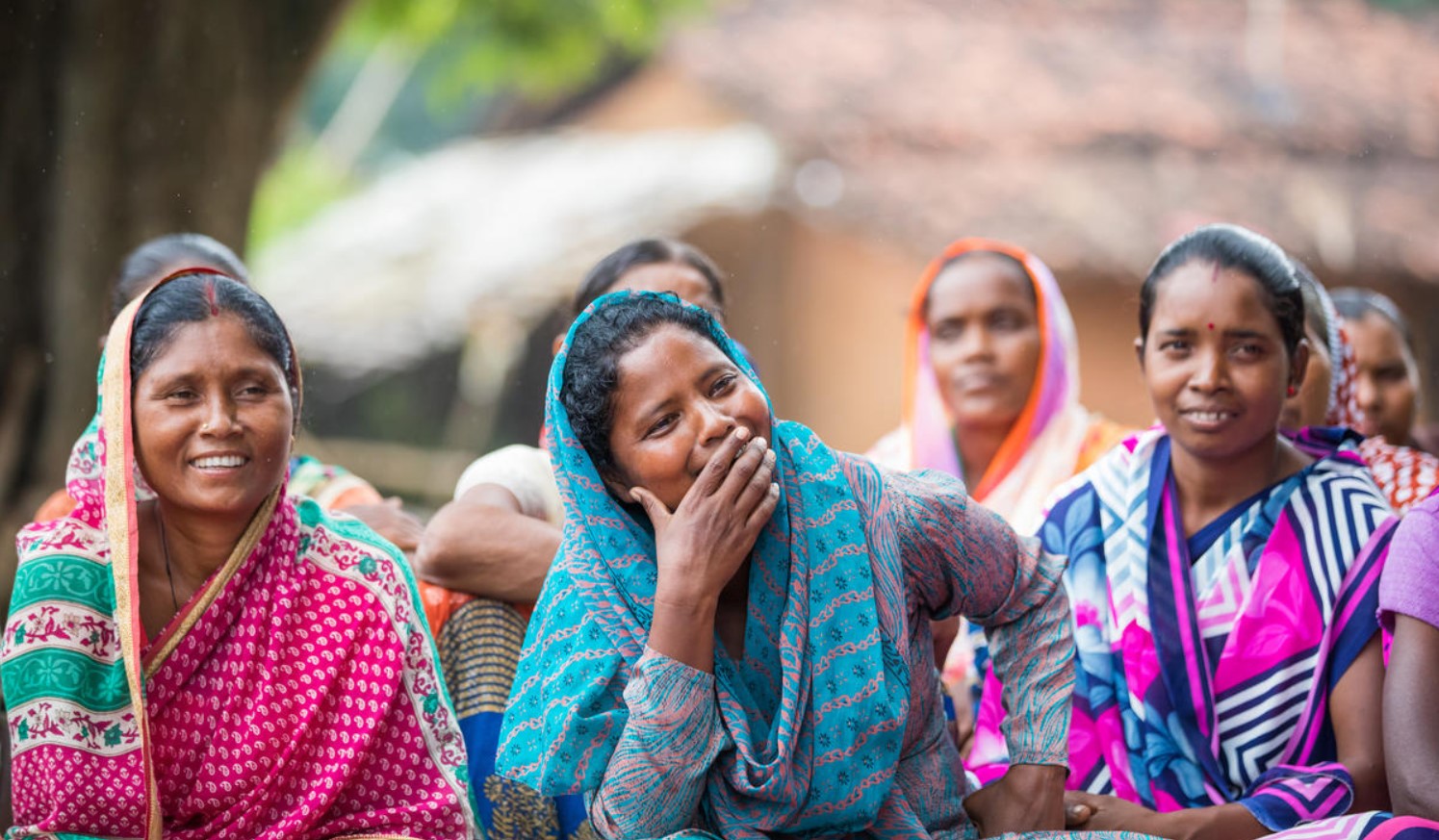
The numbers are extraordinary. In India, the government’s National Rural Livelihoods Mission (DAY-NRLM) has mobilised more than 100 million rural women — over 10 crore — into over 9 million self-help groups as of mid-2025. This is very likely the largest organised network of women in the world. These groups typically consist of ten to twenty women who meet regularly, save small amounts together, build a common fund, and lend to members for everything from emergencies to small businesses.
In Bangladesh, the pioneering Grameen Bank — whose founder Muhammad Yunus won the Nobel Peace Prize for the model — serves over 10 million borrowers, of whom 97–98% are women, across the great majority of the country’s villages. Since its inception it has disbursed tens of billions of dollars in small loans, with repayment rates above 95%.
Beyond these giants lies a vast ecosystem of village savings-and-loan associations, credit cooperatives and microfinance institutions across Africa, Asia and Latin America, reaching hundreds of millions more.
What the rigorous evidence actually shows
The temptation is to declare all of this an unambiguous triumph. The honest research picture is more textured, and the most valuable thing this article can offer is to distinguish clearly between two things often lumped together: microcredit (individual small loans) and self-help groups (savings-based collectives with a group and often a training component). The evidence on them differs.
On microcredit alone, the evidence is sobering. A landmark set of six randomised controlled trials, synthesised by the Abdul Latif Jameel Poverty Action Lab (J-PAL), tested microcredit rigorously across several countries. The results punctured the more utopian claims: in most sites, microcredit did not raise average household income or consumption, and it did not, in three of four evaluations that measured it, produce measurable gains in women’s empowerment. Microcredit turned out to be a useful financial tool — it helped households manage cash flow, cope with shocks and invest in existing businesses — but it was not the transformative anti-poverty engine its early boosters promised. Benefits tended to concentrate among women who were already entrepreneurial.
On self-help groups, the evidence is notably stronger. A systematic review by the International Initiative for Impact Evaluation (3ie), examining 34 studies (many from India), found that participation in self-help groups increased women’s control over household resources, their participation in community decision-making, their mobility outside the home, and their involvement in reproductive-health decisions. In other words, the collective, savings-based model — with its regular meetings, group solidarity and, crucially, accompanying training — delivered empowerment gains that pure microcredit did not. The review found that models combining savings with training produced notably larger effects than credit alone.
The difference is instructive. It appears that the group itself — the weekly gathering, the shared decisions, the social ties and the confidence built through collective action — may matter as much as, or more than, the money. Economic independence, on this evidence, is not simply a matter of access to a loan; it grows from the combination of financial resources, skills and social solidarity that the self-help model provides.
The honest caveats
Even the stronger self-help-group evidence comes with limits worth stating. The 3ie review found that while economic and social empowerment improved, psychological empowerment — women’s self-confidence and sense of self-worth — did not consistently improve. Empowerment is multidimensional, and financial groups move some dimensions more than others. There are also open questions about cost-effectiveness at very large scale and about whether gains sustain over the long term.
Supporting evidence from India’s large-scale programmes is encouraging on the economic dimension: evaluations of the JEEViKA self-help-group programme in Bihar found that participation was associated with a substantial decline — around 20% — in households’ reliance on high-interest informal moneylenders, along with gains in assets and food security. Escaping the grip of predatory local lenders is itself a meaningful form of economic independence.
The broader shift: closing the financial-inclusion gap
Zooming out, these movements are part of a larger and genuinely positive trend. The World Bank’s Global Findex database, the definitive measure of financial inclusion, found that global account ownership rose to 76% of adults by 2021. More importantly for this story, the gender gap in account ownership in developing economies narrowed to 6 percentage points, down from 9 — where it had been stubbornly stuck for years. This was the first significant narrowing of that gap, driven substantially by mobile money and the expansion of accounts to previously unbanked women. A woman with her own account — able to save privately, receive wages directly, and access credit — has a foundation for independence that a woman relying on cash and male relatives does not.


What the research counsels
The practical lessons are clear. Financial inclusion for women works best when it is more than a loan — when it combines savings, training and the social infrastructure of a group. Pure microcredit should be understood as a useful financial service, not a magic bullet for poverty or empowerment. Self-help groups, especially those paired with skills training and links to markets and government programmes, have the strongest track record for building women’s economic and social agency. And the steady closing of the financial-inclusion gender gap shows that this is a solvable problem, moving in the right direction.
The rise and reckoning of microfinance
To understand why the research is so careful to distinguish self-help groups from microcredit, it helps to recall the arc of the microfinance movement itself. In the 1990s and 2000s, microcredit was hailed as a near-miraculous solution to global poverty. Muhammad Yunus and the Grameen Bank shared the 2006 Nobel Peace Prize, and the model — tiny collateral-free loans to poor women to start micro-enterprises — spread across the developing world amid extraordinary optimism. The narrative was irresistible: give a poor woman a small loan, and she would lift herself and her family out of poverty through her own enterprise.
Then came the rigorous evaluations, and with them a necessary correction. When researchers subjected microcredit to randomised controlled trials — the gold standard of causal evidence — the transformative effects proved elusive. The J-PAL synthesis found that microcredit reliably expanded access to useful financial services but did not, on average, raise incomes or lift households out of poverty, and did not consistently empower women. In some markets, aggressive lending and high interest rates produced over-indebtedness, and a few high-profile crises — most notably in the Indian state of Andhra Pradesh around 2010 — revealed the harm that poorly regulated microlending could inflict. The lesson was not that microcredit is worthless but that it was oversold: it is a valuable financial tool for smoothing consumption and managing risk, not a poverty-eradication engine or an automatic route to empowerment. Sober expectations, grounded in evidence, replaced the earlier hype — and that recalibration is itself a model of how development policy should learn from rigorous testing.
Why the group model succeeds where credit alone falls short
The stronger performance of self-help groups points to an insight that pure-credit models missed: economic empowerment is a social process, not merely a financial transaction. When women meet weekly, pool savings, guarantee one another’s loans and make collective decisions, several things happen at once that a solo loan cannot deliver. Members build financial discipline through the routine of regular saving. They acquire information and skills from one another and from the training that good programmes attach to the groups. They develop a public identity and voice — speaking in meetings, handling money, negotiating with banks and officials — that carries over into the household and the community. And they form bonds of solidarity that can be mobilised in a crisis or turned toward collective action, from demanding better public services to standing against domestic violence. The 3ie review’s finding that group participation improved women’s mobility, their say in household and reproductive decisions, and their engagement in community affairs reflects exactly this social dimension. The money is necessary, but it is the group — the regular gathering, the shared responsibility, the collective confidence — that appears to do much of the empowering work.
Scale, sustainability and the open questions
India’s self-help-group movement, now encompassing more than 100 million women, is the largest test of this model ever attempted, and it raises questions that the research is still working through. Can the quality of empowerment survive at such enormous scale, when programmes are delivered by vast bureaucracies rather than dedicated NGOs? How cost-effective is the model compared with alternatives such as direct cash transfers, which some evidence suggests can also empower women with less institutional machinery? Do the gains persist over the long term, or fade once external support is withdrawn? The honest answer is that the evidence is still accumulating. What is clear is that the self-help-group approach has a stronger and more consistent empowerment track record than microcredit alone, that it works best when it combines savings, training and links to markets and government programmes, and that it has demonstrably pulled tens of millions of women out of dependence on predatory moneylenders and into a measure of financial agency they did not previously possess. That is a real achievement, even as researchers rightly keep asking how to make it larger, cheaper and more durable.
Groups as a platform for more than finance
One of the most promising developments in the field is the recognition that a mature network of women’s groups is valuable infrastructure far beyond its original financial purpose. Once tens of millions of women are organised into functioning groups that meet regularly and trust one another, that network can carry other services efficiently. Governments and NGOs have used India’s self-help-group architecture as a delivery channel for health education, nutrition programmes, agricultural extension, sanitation campaigns, insurance, pension enrolment, and information about government entitlements. During public-health crises, these groups have been mobilised to spread accurate information and produce supplies. This “platform” function may ultimately prove as consequential as the savings and credit that started it: the group is a standing organisation of women with reach into every household, and that organisational capacity is scarce and valuable in exactly the rural communities that are hardest for formal institutions to serve. It also has a political dimension — organised women are harder to ignore, and self-help-group federations have in places become a collective voice pressing local government for better services, echoing the local-governance findings elsewhere in this collection. The lesson is that building the groups creates an asset whose returns extend well beyond the balance sheet.
It is also important to guard against romanticising the model. Self-help groups are not a substitute for the things only states and formal economies can provide — decent jobs, functioning public services, legal rights, and social protection. At their worst, group-based schemes can shift the burden of development onto poor women themselves, asking them to save and lend their way out of structural poverty that no amount of collective thrift can actually fix. The strongest evidence supports groups as a complement to, not a replacement for, broader economic opportunity and public investment. Understood that way — as one effective tool among several, best deployed alongside education, healthcare, jobs and rights rather than in place of them — the self-help-group model earns its place. The women in these groups are building real agency, but they should not be left to build the whole edifice of their economic security alone.
The hundreds of millions of women in these groups are not waiting for permission to become economically independent. The research shows that, given the right combination of tools, they build that independence themselves — and that the group, not just the loan, is often the engine that makes it happen.
Sources: Press Information Bureau, Government of India (2025) on DAY-NRLM; Grameen Bank official statistics; J-PAL, Microcredit: Impacts and Limitations (synthesis of six RCTs); 3ie systematic review of self-help groups and women’s empowerment; Hoffmann et al., evaluation of the JEEViKA programme (Bihar); World Bank, Global Findex Database 2021.